––
61th International Art Exhibition – La Biennale di Venezia
––
May 9 – November 22, 2026
Supported by Saida Mirziyoyeva, Advisor to the President of the Republic of Uzbekistan
Commissioned by Gayane Umerova, Chairperson of the Uzbekistan Art and Culture Development Foundation

The Aural Sea


Location: Quarta Tesa (Arsenale)

intro

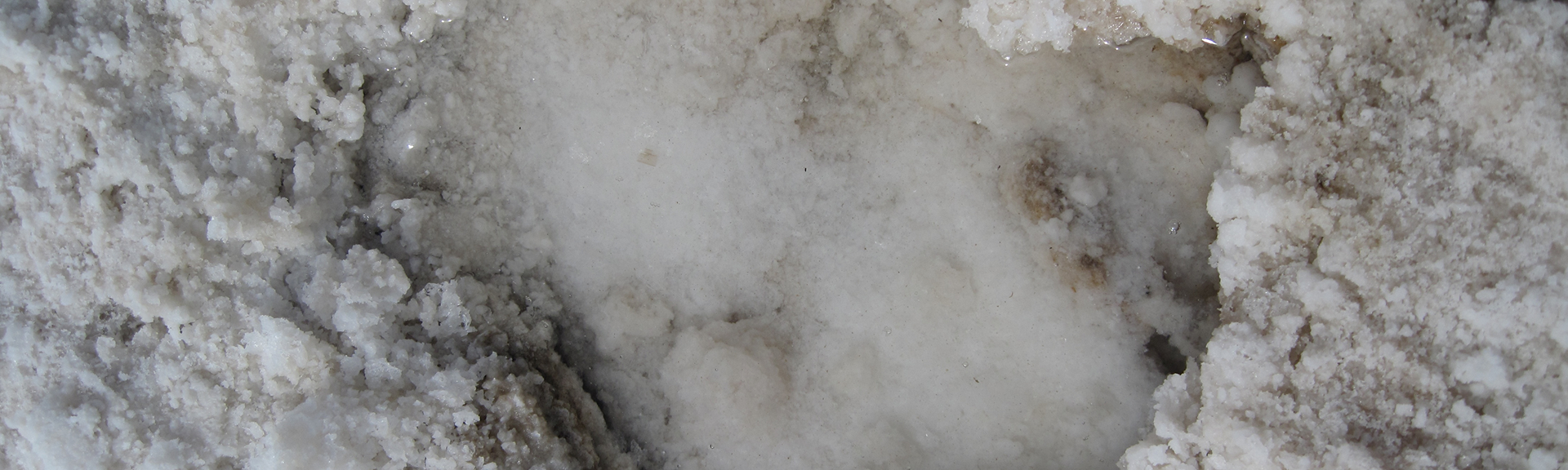
The Uzbekistan Art and Culture Development Foundation (ACDF) announces the Uzbekistan National Pavilion at the 61st International Art Exhibition – La Biennale di Venezia, featuring the exhibition The Aural Sea. Commissioned by ACDF Chairperson Gayane Umerova, the Pavilion turns to mythmaking and storytelling as ways of responding to environmental transformation – and of learning from the Aral Sea region of Karakalpakstan, Uzbekistan. Since the 1960s, the large-scale diversion of the region's rivers for agricultural irrigation has caused the Aral Sea to lose over 90% of its volume, turning one of the world's largest inland lakes into desert.
The Aral basin has long been a crossroads. Situated on the northern branch of the Silk Road, the region's archaeological record reveals layers of civilisation shaped by the dynamics of water. When Marco Polo travelled through Central Asia in the thirteenth century, the Aral Sea does not appear in his account, an absence that resonates with a landscape whose shorelines have shifted over centuries.
Here, the presence and absence of water is not only a modern condition but a long temporal structure that continues to shape how communities live, remember, and imagine. Fishermen have told stories of glimpsing ruined cities on the lakebed; such moments became the seeds of new legends, binding past and future in a single image.
The Pavilion takes inspiration from Karakalpak author Allayar Darmenov, who began writing the Aral Sea back to life in 2015, when he was eighteen. In his fiction, swordfish race through replenished waters and remember the desert years. Following Darmenov, the Pavilion proposes imagination as a form of agency: mythmaking and storytelling not as escape, but as tools for navigating loss and holding open space for what might yet be possible.

Curators

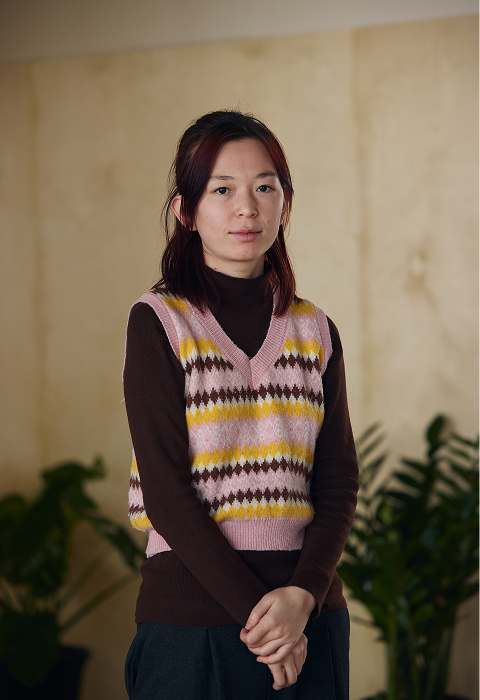
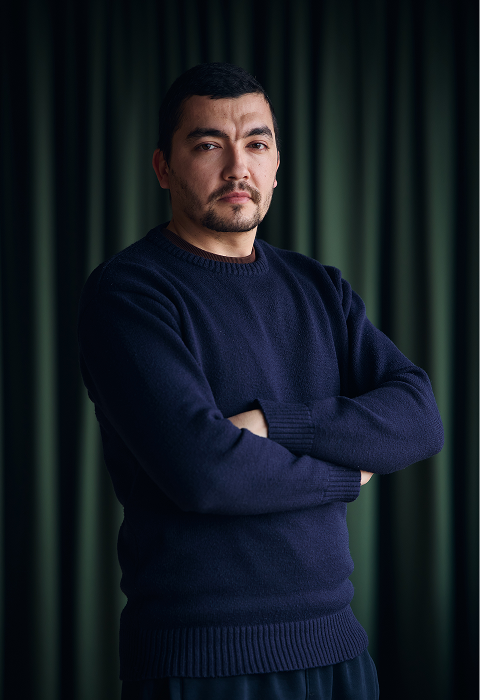
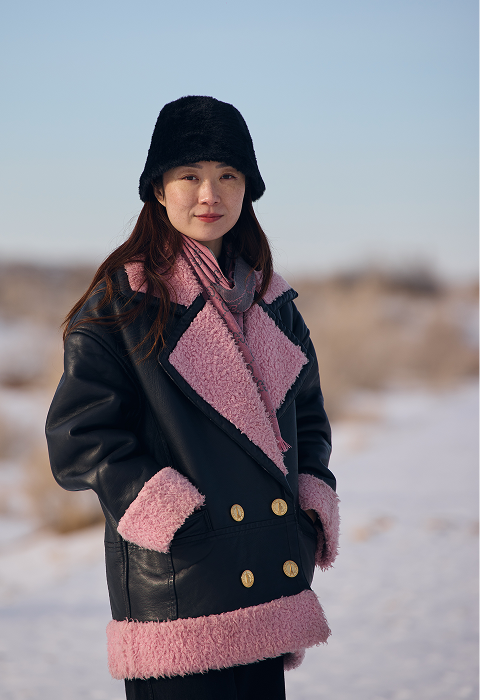
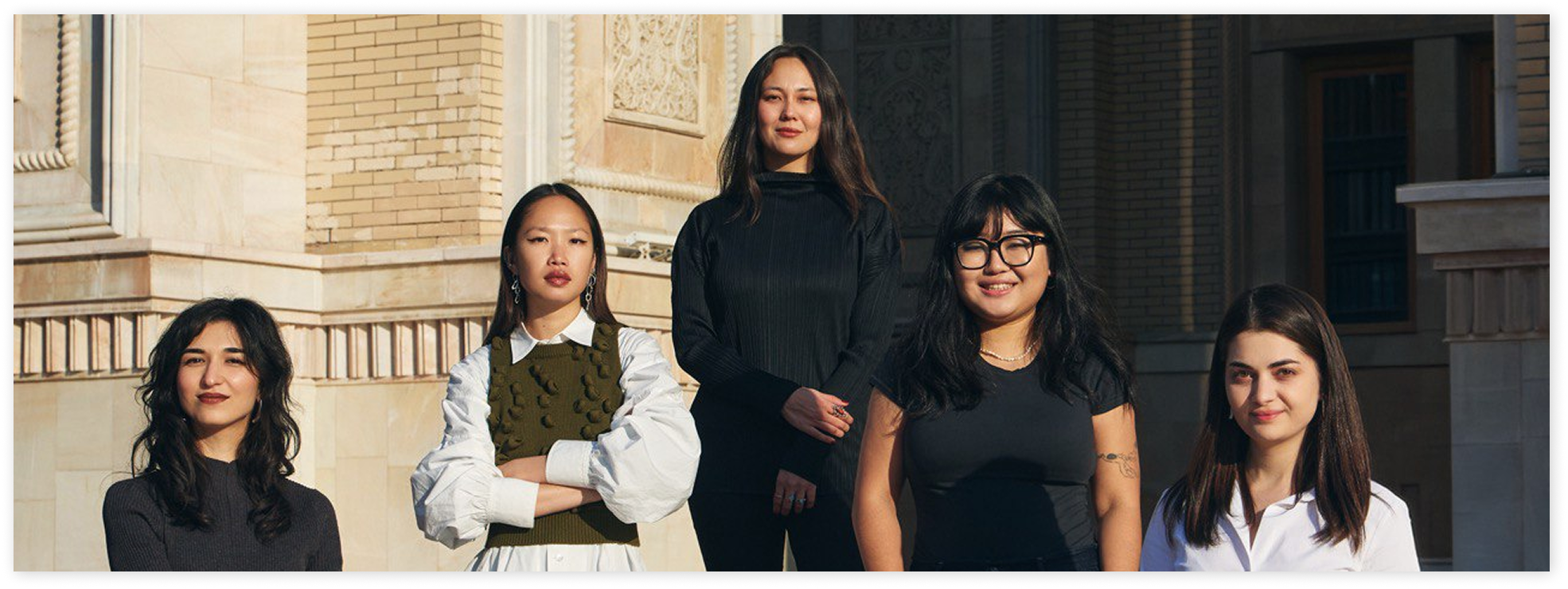
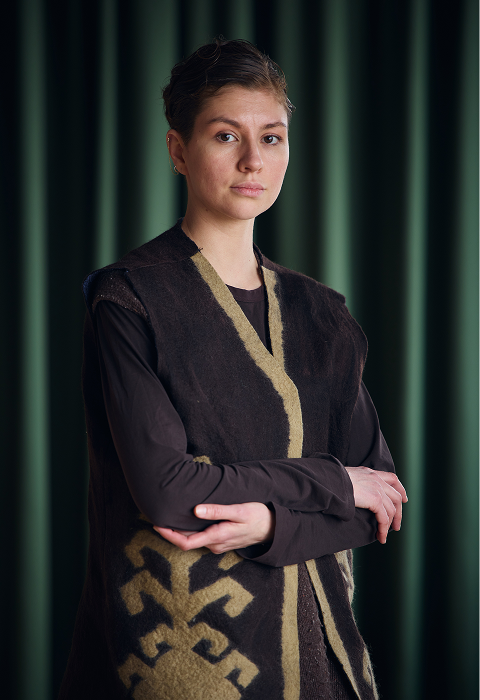
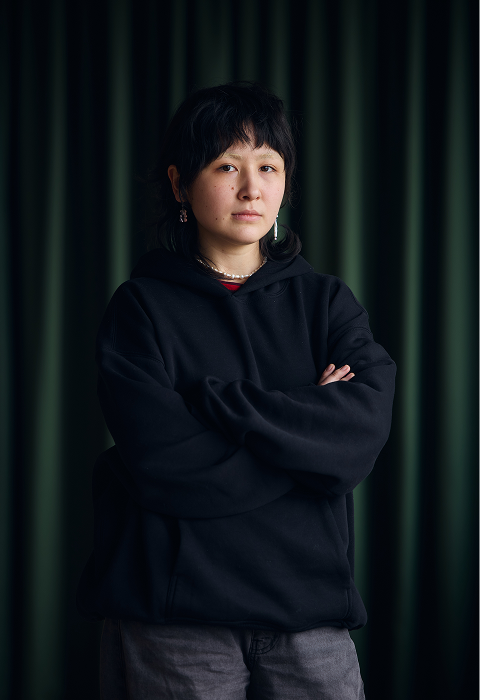
The Pavilion’s curatorial team, Sophie Mayuko Arni (b. 1995, Switzerland), Aziza Izamova (b. 1997, Uzbekistan), Kamila Mukhitdinova (b. 2003, Uzbekistan), Nico Sun (b. 1998, China), and Thái Hà (b. 1996, Vietnam), was formed through the Bukhara Biennial Curatorial School, an ACDF initiative commissioned by Gayane Umerova and led by the inaugural Bukhara Biennial Artistic Director Diana Campbell. Working collectively, they approach the Aral Sea through mythmaking and storytelling, treating imagination as a tool for thinking through environmental change.
Curators

Artists

Working across installation, interactive work, and painting, the pavilion artists Jahongir Bobokulov (b. 1996, Uzbekistan), Zi Kakhramonova (b. 2001, Uzbekistan), Aygul Sarsen (b. 2005, Karakalpakstan, Uzbekistan), Zulfiya Spowart (b. 1991, Uzbekistan),Xin Liu (b. 1991, China), A.A.Murakami (b. 1983, United Kingdom and b. 1984, Japan), and Nguyen Phuong Linh (b. 1985, Vietnam) bring practices that range from scientific modelling to folkloric imagination, from monumental textile to intimate craft. Together, the artists approach the Aral not as a problem to be solved but as a site of knowledge.
Zulfiya
ZULFIYA SPOWART lives and works in London, UK. Rooted in the reinterpretation of muraltechniques, her multidisciplinary practice unfolds through textiles, wood carving, watercolour and digital art. Spowart’s work explores corporeality and identity, connecting with past and inherited memories of migration, cultural shifts and post-Soviet transformations in Central Asia. Her textile sculptures and installations bridge realities, with folkloric guides carrying fragments of lost or forgotten histories.
zi kahromonova
ZI KAHRAMONOVA is a multidisciplinary artist and theatre designer. Shaped by a deep interest in mythology, feminist perspectives and embodied experience, her practice spans performance, puppetry, digital animation, textiles and scenography. Working experimentally across media and form, she explores the body as space and often examines taboos surrounding it. Kahramonova draws on Central and East Asian ornament, traditional techniques such as woodblock printing on textiles and urban research to create visual narratives that merge folklore and contemporary life.
aygul sarsen
AYGUL SARSEN is a painter and third-year university student in the Faculty of Arts at Karakalpak State University. In 2025, she participated at the Samarkand Art Station residency and exhibition Sandyq (Chest), featuring emerging artists from Uzbekistan, curated by Diana Rakhmanova. Her painting styleis characterised by a wish for inner freedom and a desire to expand familiar boundaries, and aims to provokean emotional response from viewers. Interested in three-dimensional installation forms, her multimediaworks bring form, colour and emotion in fluidity.
jahongir boboqulov
JAHONGIR BOBOQULOV is a contemporary artist based in Uzbekistan. He studied at the National Institute of Fine Arts and Design in Tashkent (2014–2018) and previously attended the P. P. Benkov Republican School of Art. His work has been included in group exhibitions such as Makon Rivojiat Bonum Factum Gallery, Tashkent (2018), From Tashkent with Love at AB Gallery, Seoul (2019), His-tuyg‘ular dinamikasiat Ilhom Theatre, Tashkent (2019), and Parvozat NBU Gallery, Tashkent (2024). He currently teaches at the Republican Specialized Art School In Tashkent. In 2025, he participated in the Bukhara Biennial.
xin liu
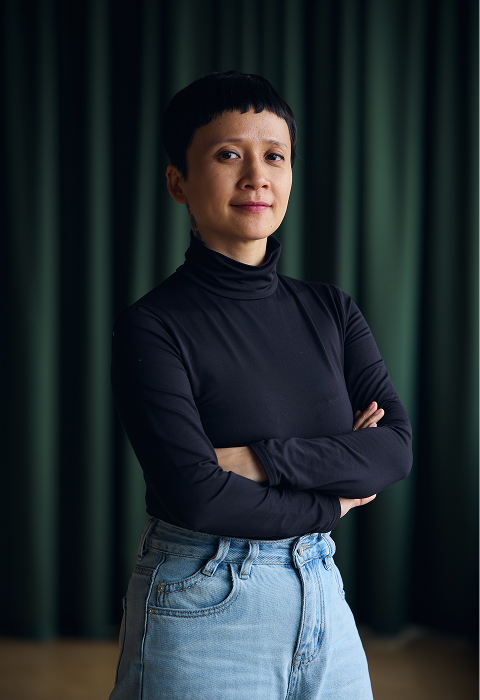
XIN LIU is a London-based artist working across art, science, and engineering. Her practice explores the material and entropic aftermath of scientific and technological ambition — examining residues such as rocket debris, cryogenic preservation, genomic code, and self-obsolescing satellites. These works form an ongoing research trajectory she describes as Cosmic Metabolism. She has held research and artist-in-residence positions at institutions including the SETI Institute, Cornell Tech, and the MIT Media Lab.
murakami
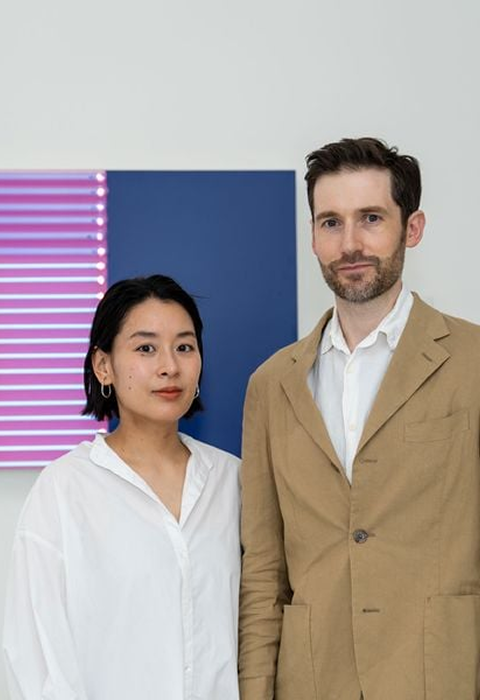
A.A.MURAKAMI is the artist duo of Azusa Murakami (b. Japan) and Alexander Groves (b. UK), established in 2020. Their immersive installations fuse art and science in their ongoing Ephemeral Tech series, a body of work that merges invented technologies with ephemeral materials and states of matter. The result is multisensory experiences that conjure unnatural phenomena, inviting audiences into poetic encounters with time, nature and perception.
nguyen phuong linh
NGUYEN PHUONG LINH travels and collects artefacts, transforming materials to create new forms which offer an alternative interpretation of ambiguous and fragmented histories and memories. She transforms these materials in order to construct alternative perspectives and interpretations to fragmented histories and personal narratives.